The Veteran's Stage Fright Paradox: Why You Still Get Nervous After 5 Years (And the Psychological Tricks That Actually Work)
You're in your fifth year of camming. Thousands of hours logged. You've dealt with every type of client imaginable, learned what works, what doesn't.
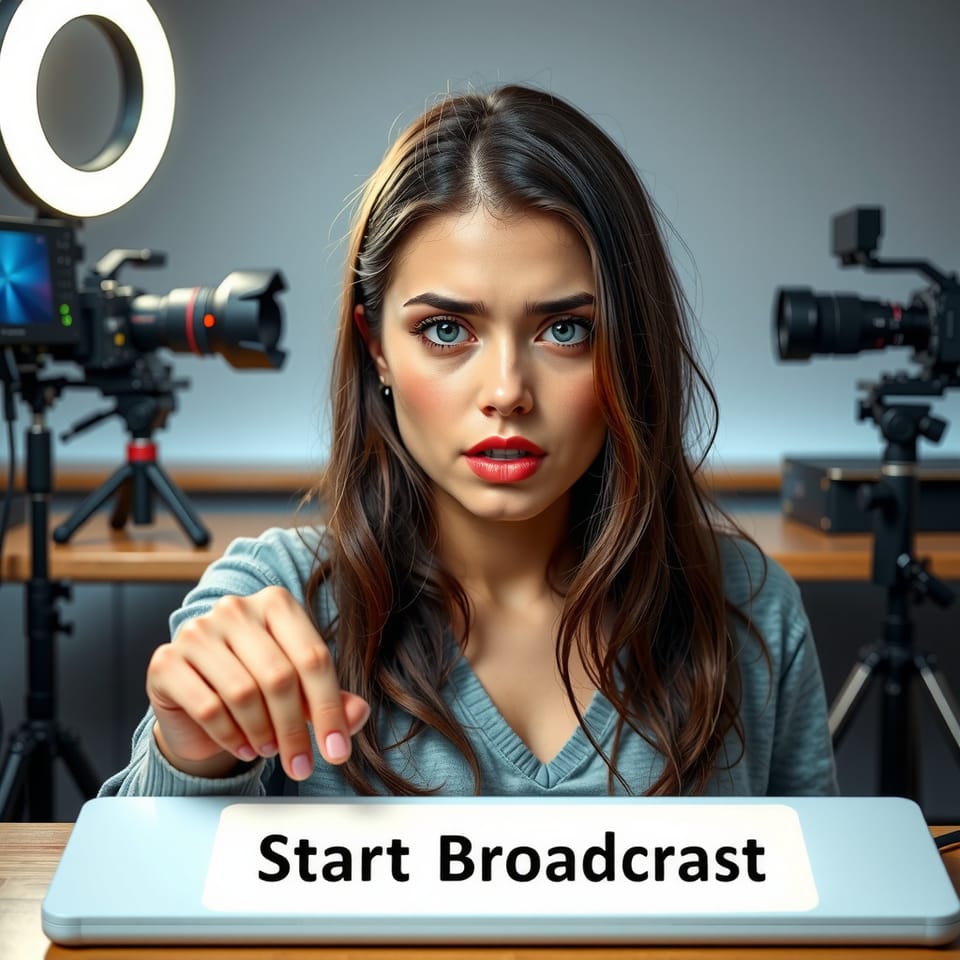
Then out of nowhere, your cursor's hovering over that 'Start Broadcast' button... and your body just freezes up.
Cold shoulders. Heart racing. This sudden, weird awareness that you're about to get naked in front of strangers. Again. Like you haven't done this a thousand times already.
What the hell?
The Stage Fright That Shouldn't Exist
Here's the thing - models who've been at this for 3-5 years report these random waves of paralyzing anxiety before streams. Not burnout. Not exhaustion. Legit stage fright, the kind that makes your hands shake and brain go blank.
One veteran model nailed it: 'I'll be getting ready, totally chill, beeboppin' around with zero anxiety. Then I go to push that stream button and suddenly I do NOT got this.'
Another one said: 'It's like becoming suddenly aware - naked, afraid.'
The really confusing part? Former dancers get this. People who've done street-level sex work get this. Models who've done way more vulnerable stuff in person still freeze before going live on camera.
You're not broken. Not regressing. And definitely not alone in this.
Why Veterans Get 'The Don't Wanna's'
The cam community actually has a name for this - 'the don't wanna's.' It's not burnout, not laziness. It's this resistance that feels exactly like performance anxiety, a freeze response your body throws at you right when you need to perform.
So what's actually going on?
1. Religious Trauma Has a Long Half-Life
If you grew up Pentecostal, Catholic, evangelical, whatever - your brain got wired to link sexuality with shame. You left the church years ago. Built a whole career. You're confident in your choices.
But your subconscious? It missed the memo.
Models call this 'conviction' - this random wave of guilt that pops up, even decades after leaving. One model said: 'Sometimes I feel like I'm gonna get grounded. I'm 30 years old!'
Another veteran explained it like this: 'I still carry a lot of their beliefs and core morals. My lifestyle doesn't line up with that religion anymore. It puts this conviction on me, makes me feel ashamed sometimes. But other times I'm like "make that money girl, rent is DUE!"'
The guilt isn't rational. Doesn't respond to logic. It's a trauma response that just... surfaces. Creating anxiety your conscious mind can't even explain.
2. Your Hormones Are Sabotaging Your Confidence
Stage fright doesn't show up randomly. Lots of models notice patterns - it lines up with ovulation, certain points in their cycle, birth control changes.
The science bit: excess progesterone turns into cortisol, which triggers your freeze/fight/flight response. You're not imagining the anxiety - your hormones are literally creating it.
One model noticed: 'This happens to me sometimes, but usually when I'm ovulating because I tend to be anxious during that time. I get a bit too aware of myself, feel awkward.'
Financial pressure makes it worse. You need to perform to pay rent. But pushing to perform despite your body's cortisol spike? That creates this feedback loop - anxiety about being anxious, which makes more cortisol, which creates more anxiety.
3. You're More Aware of the Emotional Labor Now
When you're new, you're focused on the technical stuff - lighting, angles, platform rules, building regulars. The performance just becomes automatic.
But after years of this? You become hyper-aware of the emotional labor. The divorcing of how you actually feel from how you need to appear. Managing everyone else's emotions and desires constantly. Performing sexuality even when you're just... not feeling it.
This awareness creates what models describe as feeling 'over-exposed' - not physically, but emotionally. You suddenly realize you're about to do intimate labor for strangers while juggling your own internal stuff.
And that awareness? That's what triggers the freeze.

The Strategies That Actually Work
Good news - this anxiety usually passes after 10-20 minutes of being live. Your body adjusts, performance mode kicks in, you remember why you've been doing this for years.
The trick is getting past those first 10-20 minutes without the anxiety tanking your confidence or your income.
What veteran models say actually helps:
Use a Warm-Up Show
When you've got stage fright, going fully public feels overwhelming. Solution? Create a buffer.
On Chaturbate, use password shows. MyFreeCams, club shows. Stream for 10-15 minutes in this semi-private mode. Get comfortable being on camera without the pressure of a full public room.
One model put it: 'Some days when I'm overwhelmed or getting stage fright, I pop these on for 10-15 minutes, let myself get comfortable, then go public. Like a warm-up for my confidence.'
Pretend You Don't Care
Sounds backwards, but multiple veteran models swear by this - act like you genuinely don't care about anyone in the live.
Not rude - just detached. Unbothered. Treat it like you're hanging out in your room and the camera just happens to be on. Remove the performance pressure by mentally treating the audience as background noise.
One former dancer said: 'I've been doing this 3 years and I still don't get how I get stage fright. You know what helps? I just act like I don't even care about anyone in the live. It genuinely works.'
The paradox works because stage fright feeds on needing to be perfect. Remove the stakes mentally, and the anxiety loses power.
Reframe the Work as Art, Not Sex
When you're wrestling with religious trauma or feeling over-exposed, the explicit nature can trigger shame spirals. The fix? Temporarily desexualize what you're doing.
Think vintage pin-ups, Dita Von Teese, classic Playboy. Reframe it as sensual instead of sexual - focus on tease, aesthetics, artistic performance rather than explicit acts.
Keep explicit stuff to private shows only. In public chat, focus on connection, flirtation, visual appeal without going overtly sexual.
One model described her approach: 'I unsexualize the job, use dessert terms for sexual acts. Pour creative energy back into myself through dance classes and art projects. Helps me reconnect with my feminine energy without the performance pressure.'
Practice Micro-Affirmations During Streams
Your internal dialogue during a stream shapes your confidence. When you're feeling exposed or anxious, your brain defaults to negative self-talk.
Interrupt it with micro-affirmations. When you see yourself on camera, deliberately think positive stuff about your body.
One model explains: 'In my head I'll be like "Oh my nipples are so cute." "My booty is so damn cute!" Like mini positive manifestation rewiring. It actually helps shift the anxiety.'
This isn't toxic positivity or forcing confidence you don't feel. It's interrupting the shame spiral with neutral-to-positive observations that remind your brain you're safe.
Honor Your Energy, Not the Schedule
Hard truth - models who push through when already depleted make way less money than when they honor their energy and stream during high-energy windows. Check out more on energy management in our guide on earning more by doing less.
One veteran shared: 'Yesterday was less time but I made more money. Today I was drained, pushed it anyway even though I knew better - barely made anything. Always having to relearn this lesson!'
There's a difference between pushing through resistance and forcing depleted energy. Resistance is temporary - passes after 10-20 minutes. Depletion is your body saying it needs recovery.
If stage fright comes with exhaustion, low libido, or feeling emotionally burnt out - that's not stage fright. That's your body protecting itself. Listen.
The Physical Interventions That Work
Sometimes the anxiety has physical causes that need physical solutions:
Use the Mammalian Dive Reflex
When your body triggers freeze/fight/flight, you need to calm your nervous system before performing. The mammalian dive reflex is one of the fastest ways.
Before streaming, splash cold water on your face or hold your breath while dunking your face in ice water for 15-30 seconds. Triggers a parasympathetic response that immediately drops your heart rate and reduces cortisol.
Track Your Cycle Patterns
If your stage fright lines up with specific cycle points, start tracking it. Use a period tracker, note when the anxiety shows up.
Notice patterns? Adjust your schedule - stream during high-confidence windows, do off-camera work during high-anxiety ones. Not giving in to anxiety, just working with your body's natural rhythms instead of against them.
Consider Medical Interventions
If stage fright is severe enough to impact your income, talk to your doctor about short-term beta blockers. These medications block adrenaline receptors - performers, public speakers, musicians commonly use them for performance anxiety.
Also check your birth control. If stage fright started or got worse after changing methods, the hormonal shift might be the culprit.
When Stage Fright Is Actually a Red Flag
Sometimes what looks like stage fright is your body telling you something important:
If the anxiety comes with pushing yourself past genuine boundaries, it might be a trauma response. One model explained: 'Someone told me that if I push my body past or through anything, the body processes it as assault. Whenever I feel over-exposed or freezing, I connect more to my feminine energy off-cam through dance and creative projects.'
If you're consistently forcing yourself to perform when your body's screaming no, that's not stage fright - that's your survival instinct trying to protect you.
The difference: stage fright passes after 10-20 minutes and you settle into flow. A trauma response gets worse the longer you push.
You're Not Broken, You're Human
Most important thing to understand - veteran stage fright doesn't mean you're regressing or losing your ability to do this. Understanding the psychology behind performance anxiety is key to managing it long-term.
Like one model said: 'It's hard being naked in front of strangers. You're human.'
The anxiety proves you still have boundaries. That you're still processing the emotional labor. That your nervous system's still protecting you.
The goal isn't eliminating stage fright completely. It's developing strategies to move through it without it destroying your confidence or income.
And sometimes? Stage fright is your body's way of saying take a day off. Reconnect with your energy. Remember you're more than your performance.
That's not weakness. That's wisdom.