The Studio Pressure Trap: Why Cam Studios Are Making Models Sick (And the Independence Movement That's Fighting Back)
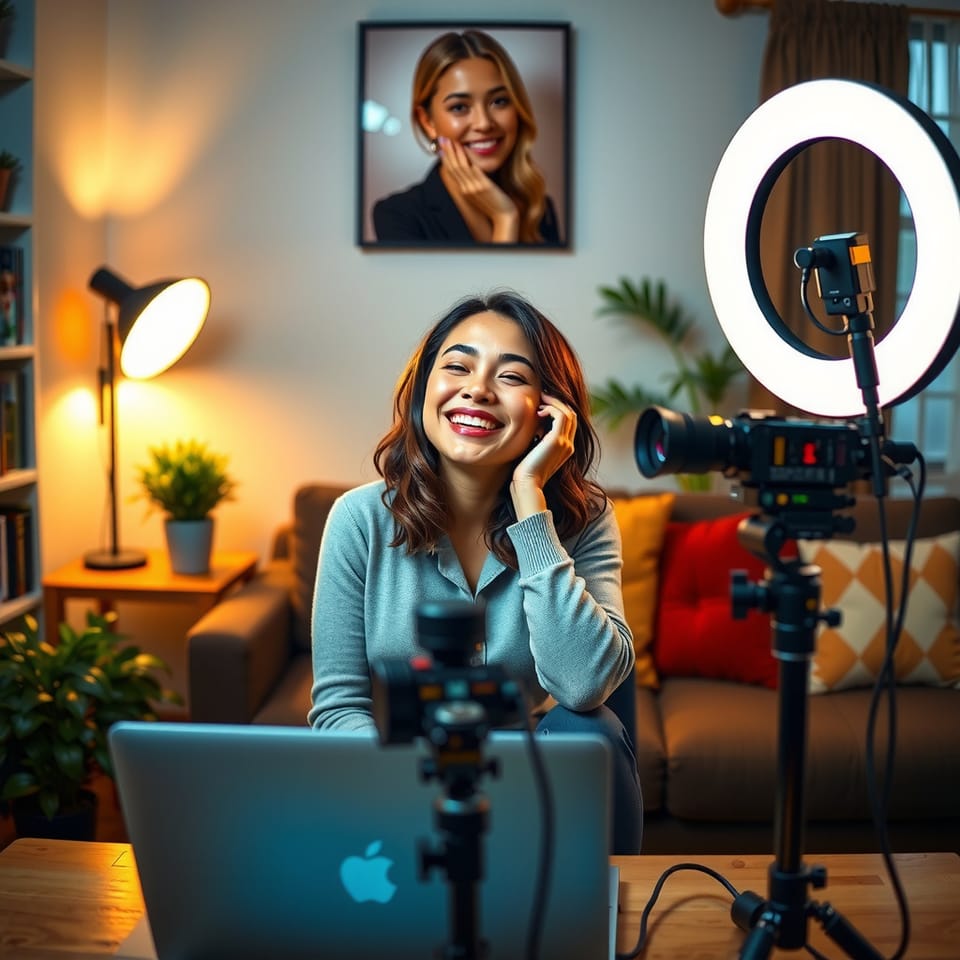
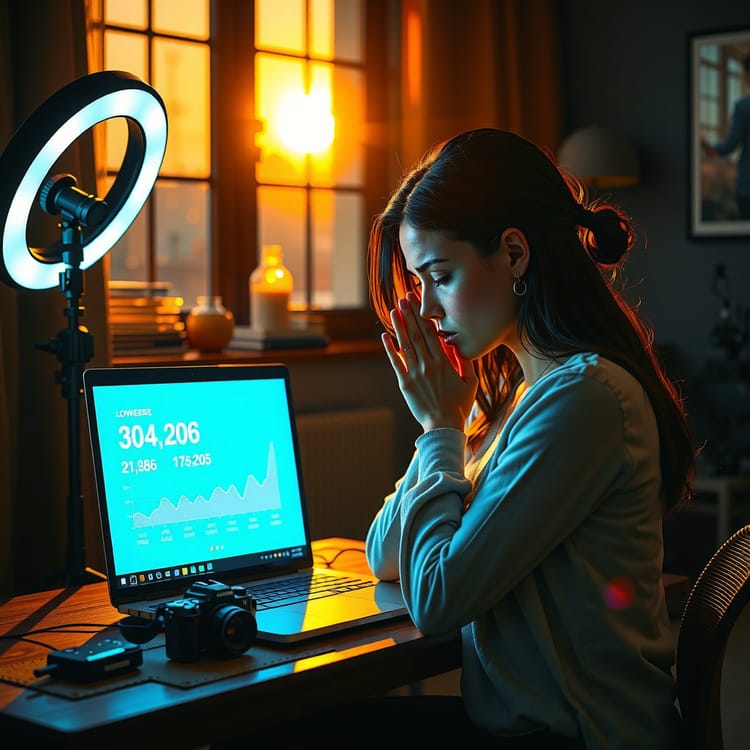
She was 5'3" and 108 pounds.
The studio told her to lose weight anyway. Weekly weigh-ins became routine. She had to send daily photos of her meals to her 'operator' for approval. The messages started coming through during her streams: 'You look bad on camera.' 'If you sit like that you have an ugly tummy.' 'Your legs are too fat.'
When she finally left the studio and started camming from home, something clicked. The studio wasn't helping her succeed-it was slowly destroying her.
Her story? It's not an outlier. Across cam model communities, you'll find countless similar horror stories about studios that promise support but deliver surveillance, body shaming, and straight-up financial exploitation. The good news is that models are fighting back, and they're doing it by going independent.
The Studio Promise vs. The Studio Reality
Studios know how to sell themselves. They market to every new model's fears. No equipment? They've got it covered. Don't know what to say on cam? Training included. Worried about privacy at home? Come use their space.
Sounds great, right? The catch? Usually 50% of your earnings. Oh, and increasingly-your mental health.
Let's break down what studios actually provide for taking half your income:
- A webcam and internet connection
- A private room-but only during your scheduled hours
- 'Training' that basically boils down to: smile more, dance more, give more for free
- An 'operator' who watches your stream and messages you. Constantly.
That last one? Yeah, that's where things get dark.
The Micromanagement Machine
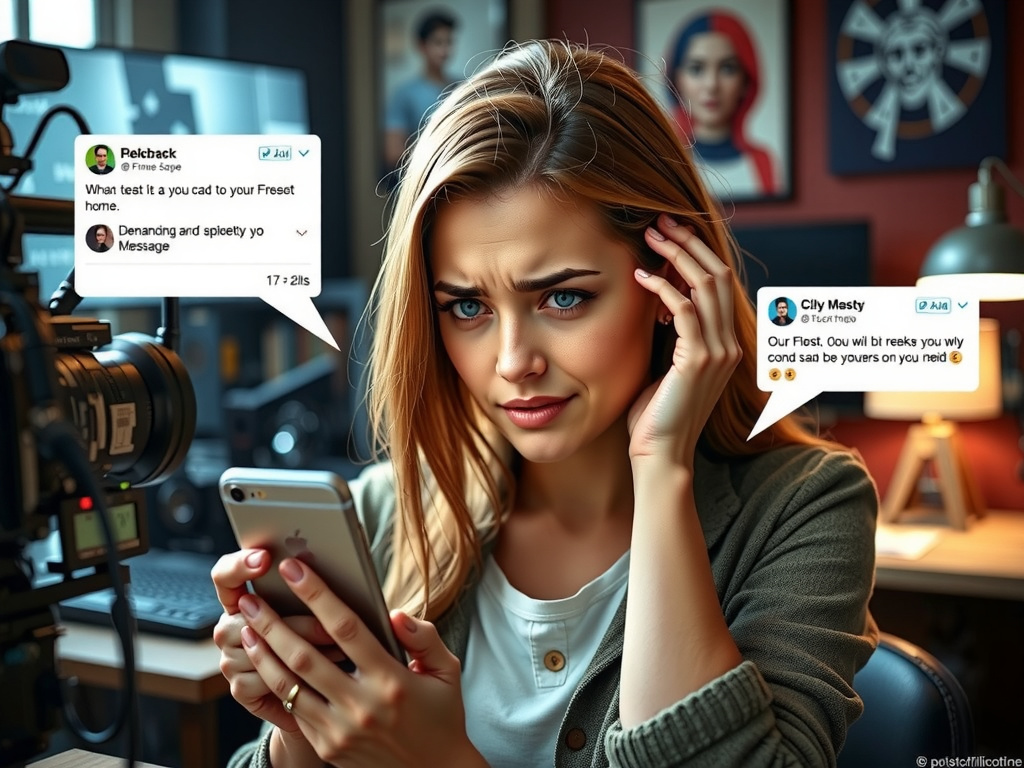
Models describe studio environments as relentless surveillance. Picture this: you're mid-stream, actually building chemistry with someone who might tip, and your phone buzzes:
"SMILE MORE"
"BE MORE ACTIVE"
"DANCE. MOVE. ENGAGE."
Here's the irony-these constant interruptions kill your flow and make you less engaging. But when your room stays empty? The studios blame you.
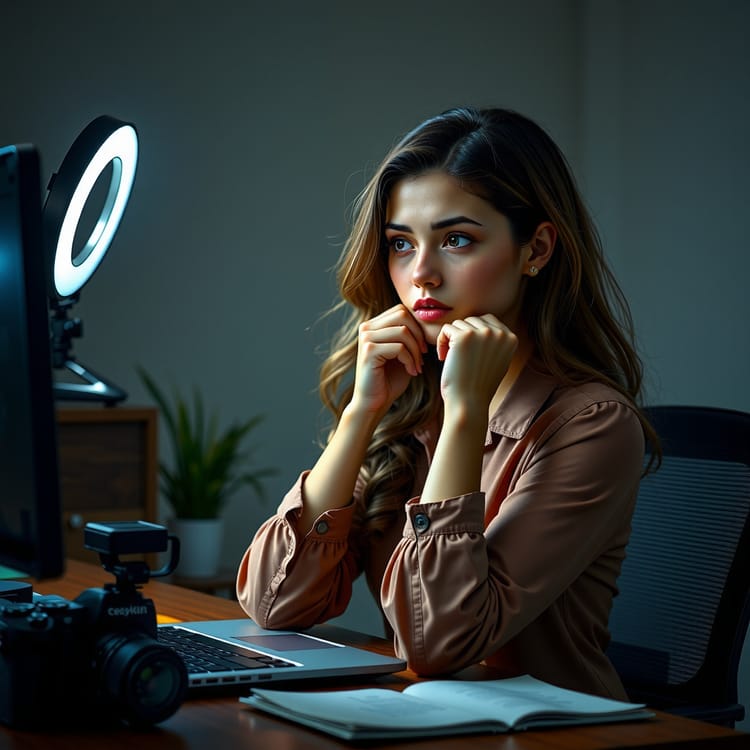
One model put it this way: 'They put a lot of pressure on me to be this and that, lose weight when I'm actually thin, constantly messaging me to smile on camera, be active, dance, move, engage and blame me if my room was empty. It wore me down.'
Studios run on a factory model: train everyone the same way, pressure them to perform identically, take half the money. Problem is? Camming isn't assembly line work. What makes one performer thrive will completely kill another's vibe.
The Body Image Nightmare
Multiple models have reported studios implementing so-called 'wellness programs' that are basically eating disorder incubators:
- Weekly weigh-ins with 'operators' who have zero-and I mean zero-nutritional training
- Daily food photo submissions
- Comments about bodies mid-stream ('your tummy looks ugly when you sit like that')
- Pressure to fit one narrow beauty standard, regardless of your actual niche
One model observed: 'I recently noticed some studio models who are already popular are becoming terrifying skinny, its concerning honestly!'
Studios fixate on one specific aesthetic over model health and-here's the kicker-over what actually converts to tips. Plenty of successful models are crushing it in the BBW, MILF, or alternative categories. But studios often lack experience with diverse performer types, so they default to pressuring everyone toward the same cookie-cutter look.
The 50% Question Nobody Asks
Studios typically take 50% commission. Half. Of. Everything.
Let's put that in perspective:
- Chaturbate takes 20-40% depending on whether you broadcast or use apps
- Streamate takes 30-35%
- OnlyFans takes 20%
So you're already paying the platform 20-35%, then handing over another 50% of what's left to the studio. Let's do the math: if you earn $1,000 in gross tips on Chaturbate (which takes 30%), you get $700. The studio grabs $350 of that. You keep $350.
So what exactly did the studio provide for that $350?
- A webcam you could buy yourself for $50-150
- Internet connection (maybe $100/month max)
- Room rental (value varies, but still)
- Toxic messages about your body and performance
Yeah. The math doesn't math.
The Exit Trap
A lot of studios make leaving difficult-or outright impossible:
- They register your cam accounts under their email, making it nearly impossible to claim ownership
- Some will ban you from the platform entirely if you try to leave
- They condition you to believe you can't possibly succeed without them
- They systematically destroy your confidence by blaming you for everything that goes wrong
Models who manage to escape report spending weeks or months learning to cam 'naturally' again. They've been trained to perform like robots.
'I don't know how to just be myself anymore,' one model wrote. 'They trained me to smile constantly, dance constantly, act over-enthusiastic for every token. Now I'm home and I don't know if I should sit quietly or keep performing.'
The Independence Movement: What Actually Works
Here's the thing: models who've ditched studios are sharing what actually makes money. Spoiler alert-it's not constant dancing and forced smiles.
The 'Boring Until Tipped' Strategy
One successful independent model explains it like this: 'I have the most resting bitch face and never entertain for free. When it's dead online, so am I with my communication. I come on here for research or do admin in the background. I only chat when someone tips me and I still make more money than my friends in their vanilla jobs and in half their working time.'
This is the opposite of studio training. But it works because:
- It filters out freeloaders from the jump
- It establishes clear boundaries from minute one
- It prevents burnout from performing to empty rooms
- Serious tippers actually respect models who value their own time
The Activity Strategy
Independent models fill slow times with actual activities instead of forcing fake energy:
- Painting nails
- Coloring or crafting
- Playing video games
- Stretching or yoga
- Scrolling their phone with AirPods in
This serves multiple purposes: you're visibly occupied (not desperately waiting around), you're not burning out, and you're genuinely relaxed-which is way more appealing than frantic dancing for zero tips.
The Break Strategy
Studios pressure you to stay online for hours no matter how dead the traffic is. Independent models? They know better:
'If it's slow I give it its grace, wait for 5-10 more mins and if it's still slow I take a break. Come back 30 mins later and check in again.'
This matters because your conversion rate (paid time divided by total time) affects your ranking on most platforms. Grinding for hours making nothing tanks your stats and signals to the algorithm that you're not worth promoting.
Better to log off, preserve your stats, and try again when traffic picks up.
When Studios Make Sense (And When They Don't)
Look, let's be real: studios aren't universally evil. They do serve a purpose in specific situations.
Studios make sense if:
- You literally can't cam from home (roommates, family, housing situation)
- You have zero equipment and zero money to get started
- You need immediate income and can't wait to set things up independently
- You're treating it as a stepping stone-save money, learn the basics, get out within a few months
Studios don't make sense if:
- You have private space at home
- You own a phone or laptop with a decent camera
- You're already struggling with body image issues or eating disorders
- You're introverted or neurodivergent-constant messaging will absolutely break you
- You value autonomy over hand-holding
As one veteran model bluntly put it: 'Studios are mainly needed by those who are shit themselves.' Harsh? Maybe. But there's some truth there. If you can figure things out on your own, that 50% commission is rarely worth what you're getting in return.
The Minimum Viable Setup for Independence
If you're thinking about leaving a studio or starting out on your own, here's what you actually need:
Essential equipment:
- Phone with decent camera (plenty of successful models stream from phones only)
- OR laptop/computer with built-in camera
- OR webcam ($50-150 for a decent one)
- Internet connection (what you already have is probably fine)
- Basic lighting (ring light runs $30-80, or just position yourself near a window)
- Private space with a door that locks
That's literally it. Total startup cost if you need to buy everything? Around $80-230. Now compare that to giving away 50% of your earnings. Forever.
Optional upgrades as you earn:
- Better webcam
- Softbox lighting
- Green screen
- Interactive toys
- Better microphone
Buy these with the money you saved by keeping 100% of your cut. Within a month or two of independent work, you'll have made back what the studio would've taken.
Deprogramming From Studio Training
If you're leaving a studio, expect an adjustment period. You've been conditioned to perform a certain way. Unlearning that stuff takes time.
Give yourself permission to:
- Sit quietly when you want to
- Stop smiling when nothing's funny
- Take breaks without the guilt
- Log off when you're not making money
- Experiment with different energy levels
- Block users freely without checking with anyone
- Eat what you want without photographing it first
One model shared: 'I'm introverted, low energy, and this is not my primary source of income, so for the sake of sanity and longevity, it's not worth it for me to try to appear as such. I make it work by playing my other marketable assets and use of subtlety.'
Translation? You don't need to be who the studio told you to be. You need to be someone you can actually sustain being.
The Bottom Line
Studios position themselves as necessary support systems. For most models though? They're parasites.
They take half your money. They mess with your mental health. They condition you to believe you're never good enough. They blame you when things go wrong. They make leaving as difficult as possible.
And more and more, models are waking up to the reality: I can do this myself. For way less money. With better mental health. On my own terms.
The independence movement isn't some organized thing. There's no manifesto or headquarters. It's just models quietly walking away from toxic situations, sharing their experiences, and encouraging others to do the same.
If you're in a studio that's making you sick, remember this: you already have everything you need to succeed. The studio didn't give you your appeal, your personality, or your ability to connect with viewers. They gave you a webcam and then somehow convinced you it was worth half your income.
It wasn't. It isn't. And you don't need them.