
The Full-Time Leap: When to Actually Quit Your 9-5 for Camming (And the Financial Mistakes That Force You Back)

Two weeks in and you've already banked $3,200. Your full-time job? That pays you $2,400 a month.
The math is screaming at you. Why waste eight hours a day under fluorescent lights when you could make double from your bedroom in half the time?
Your manager's been on your case all week. That 6 AM alarm makes you want to throw your phone across the room. You're exhausted from juggling both jobs, and every part of you is just... done. Quit. Now.
You start drafting the resignation letter in your head. The freedom. No commute, no dress code, no pretending quarterly reports matter. Just you, your setup, and the money rolling in.
Then month two hits.
Your 'new' tag disappears. That firehose of traffic? Now it's a trickle. You make $847. Rent is $1,400.
Panic kicks in. You log on more desperately. Users sense it and bail. You spiral harder. Next thing you know, you're calling your old boss for your job back-except they already hired someone else.
This exact scenario plays out every single week in cam model communities. So let's talk about the decision that could make or break your financial future-and the reality nobody warns you about when you're riding high on new tag earnings.
The New Tag Lie: Why Your First Month's Earnings Are Bullshit
Here's what nobody mentions when you start: those first 30 days? Complete fiction.
Platforms like Streamate, Chaturbate, and the rest give new models a massive visibility boost. You shoot to the top of search results. That little 'NEW' badge gets clicks. You're the fresh face everyone wants to check out, and the algorithm's working overtime to send traffic your way.
Day 31? The algorithm stops caring. Now you're competing with 10,000 other models on equal footing. Your traffic drops by 40%, 60%, sometimes 80%.

There's a model on r/camgirlproblems who started on Streamate two weeks ago. She's making more on weekends than her entire month's salary. The comments tell the whole story:
"Don't quit yet. Wait until your new tag expires and see what happens."
"I quit after one month and regretted it SO MUCH."
"Give it at least 6 months before making any major decisions."
The veterans get it-that first month is a honeymoon phase designed to hook you on the platform. But it's not real. Not sustainable. If you quit your job based on those numbers, you're making huge financial decisions based on completely artificial data.
The Real Timeline: How Long Successful Models Actually Waited
Talk to models who actually made it full-time and stayed there. The timeline? Not weeks or months. Years.
Most kept their vanilla jobs for 1-3 years before feeling secure enough to quit. Not because they weren't making good money camming-but because they'd seen things you don't experience in month one:
- January is dead because everyone's broke from the holidays
- Summer slumps when users are on vacation
- Algorithm changes that kill your traffic overnight
- Weeks where your room is just... crickets. For no clear reason
- Your best regular vanishes without a word
- You get sick and miss two weeks of work
You need to experience a full calendar year of camming to really get the rhythm of this industry. See your worst month and know you can survive it. Feel what it's like when your income drops 70% for three weeks straight and you still have to show up with a smile.
The community consensus? Wait at least 6-12 months of consistent earnings before you even think about quitting. And by 'consistent,' they mean your worst weeks-not just the glory days.
The Self-Employment Reality Check Nobody Prepared You For
Let's say you're pulling in $4,000 a month camming. Your day job pays $2,500. The math says quit, right?
Wrong. That $4,000 isn't actually $4,000.
Your day job gives you:
- Health insurance (worth $300-600/month if you bought it yourself)
- Automatic tax withholding (no scrambling to set aside 20-30% yourself)
- Employer's half of Social Security tax (another 7.65% you now cover)
- Paid time off (sick days, vacation, holidays that don't wreck your income)
- Retirement matching (if they offer it)
- Unemployment insurance (so if you get fired, there's something)
Now here's the real math on that $4,000 camming income:
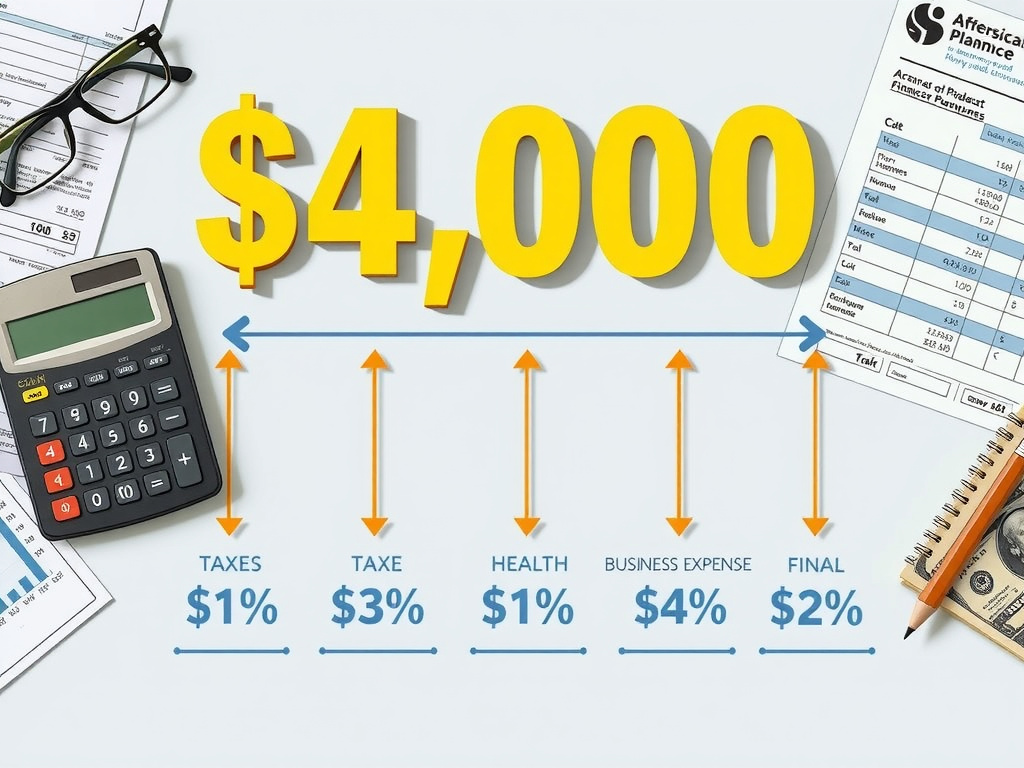
- Minus 25% for federal and state taxes: $3,000
- Minus $400 for health insurance: $2,600
- Minus business expenses (toys, lingerie, internet, lighting, accountant): $2,350
Suddenly that $4,000 looks more like $2,400. And that's in a good month. What happens when you pull in $1,500? Or $800?
Models who quit too early all say the same thing: 'I had no idea how expensive self-employment actually is.'
The Psychological Shift That Kills Your Performance
Here's what doesn't show up in any spreadsheet: the energy shift when camming stops being a fun side hustle and becomes your only lifeline.
When you have a day job, camming feels playful. Bad day? Whatever-paycheck's coming Friday. You can block the jerk demanding free shows. You can log off when your room's dead.
But when camming is your only income? Every slow minute feels like disaster. Rent depends on this. Groceries depend on this. You can't afford to log off early. You can't afford to block that annoying regular who tips $20 weekly.
And here's the cruel twist: users sense desperation. They feel when you need the money. Instead of being more generous, they pull back. The vibe's off. The fun's gone. Your earnings drop further, creating this nasty spiral.
One model put it perfectly: 'When I had my day job, I made $3,000/month camming part-time. Quit to do it full-time and suddenly I could barely hit $2,000. The pressure killed my vibe.'
The Burnout Paradox: Exhausted Either Way
But let's be real about the flip side: working two jobs is absolutely brutal.
You're up at 6 AM for your day job, slogging until 5 PM, dragging yourself home exhausted, then forcing yourself to look hot and energetic on cam until midnight. Rinse, repeat. Your sleep is garbage. Mental health tanking. No social life whatsoever. You're one bad week from completely falling apart.
This is where models get stuck between two awful choices:
- Keep both jobs and risk complete burnout
- Quit the day job and risk financial disaster
There's no perfect answer. Both options suck. But one has a safety net, and one doesn't.

The Middle Path: Part-Time Vanilla Work
Here's the option more models should seriously consider: dropping to part-time at your vanilla job instead of nuking it entirely.
If you're making $3,000/month camming and your full-time job pays $2,500/month, what if you went part-time at 20 hours a week for $1,200/month? You'd get:
- A guaranteed $1,200 base income every month
- Health insurance (some part-time gigs still offer this)
- More time to cam during your peak earning hours
- A cushion if camming has a terrible month
- Structure and routine that actually helps with discipline
- A mental break from the intensity of full-time sex work
This gives you the best of both worlds: freedom to build your cam career while keeping a financial floor underneath you. You're not betting your entire livelihood on an industry that can swing wildly unpredictable.
The Actual Checklist: When It's Really Time to Quit
Still determined to quit your day job for full-time camming? Here's the honest checklist based on what successful models actually did:
Financial Requirements:
- 6-12 months of living expenses saved (not just rent-ALL expenses)
- Your new tag has expired and you've tracked 2-3 months of post-tag earnings
- Your worst month still covers expenses with breathing room
- You've budgeted for self-employment taxes (20-30% of earnings)
- You have a solid plan for health insurance that won't wreck your budget
- You've found an accountant who actually works with sex workers
Experience Requirements:
- You've experienced a full calendar year of camming (seasonal ups and downs)
- You've survived multiple slow periods without freaking out
- You can log on consistently even when you're not feeling it
- You track metrics religiously (hours, earnings, regulars, conversion rates)
- You've built a solid base of reliable regulars (not just random whales)
Psychological Requirements:
- You've tested what it feels like when camming is your only income (use PTO to try it)
- You can handle the pressure without radiating desperate energy on cam
- You have a backup plan if camming suddenly stops working
- You've kept up professional contacts in your vanilla field (just in case)
- You're leaving your vanilla job on good terms (seriously, don't burn bridges)
If you can't check off every single box on this list, you're not ready. And honestly? That's okay. It doesn't mean you're failing-it means you're being smart.
The Exception: When Quitting Anyway Might Be Right
There is one scenario where quitting early might actually make sense: when your vanilla job is actively destroying your mental health.
If you're in an abusive work environment, if the stress is making you physically sick, if you're having panic attacks every morning-sometimes the mental health payoff of quitting is worth the financial risk.
But even then, the smart play is:
- Save as much as you possibly can first
- Line up another part-time job immediately (retail, service work, literally anything)
- Cut your expenses way down
- Have a concrete plan for what you'll do if camming income drops 50%
Don't jump without a parachute, even if the building's on fire. Build the smallest possible parachute you can manage.
The Bottom Line
That first month where you're raking in incredible money? It's lying to you. The algorithm boost ends, and reality smacks you in the face.
The models who successfully transition to full-time camming and actually stay there aren't the ones who quit fastest. They're the ones who waited, saved, planned, and only made the leap when they had a rock-solid foundation. That's why so many successful models study strategies like the six-figure cam model blueprint-understanding what truly separates full-timers who make it from those who quit too early and end up back where they started.
Yeah, working two jobs is brutal. Exhausting. You're sacrificing sleep and any semblance of a social life. But you know what's worse? Being three months into full-time camming, pulling in $900, with no health insurance and rent due in five days.
The veteran models who kept their vanilla jobs for 1-3 years while building their cam careers? They're the ones still camming full-time five years later. The ones who bailed after one good month? Most are back in vanilla work, wondering what the hell happened. One major mistake they made was underestimating the emotional labor tax of becoming fully dependent on this income-the pressure fundamentally changes how you show up in your room.
This isn't about being scared. It's about being strategic. You're building a business, not chasing a high. The most successful business owners don't quit their day jobs until the numbers work in the worst-case scenario, not just the dream scenario.
So before you hit 'send' on that resignation email, ask yourself: Can I survive three months of making half what I'm making now? Can I handle the mental weight of having zero safety net? Have I actually experienced what this industry looks like past the new tag honeymoon?
If the answer's no, put that resignation letter away. Keep grinding both jobs a bit longer. Build your savings. Track your worst months, not just the highlight reel. Wait until your foundation is solid enough that even a disaster month won't sink you. Understanding the fomo trap that makes models feel like they need to be online 24/7 is crucial-but that pressure should never be what drives you to ditch your safety net.
Because the models who make it long-term? They're not the boldest. They're the most prepared.