
The Laser Hair Removal Investment: Why Cam Models Are Ditching Razors for Permanent Solutions (And What It Actually Costs)
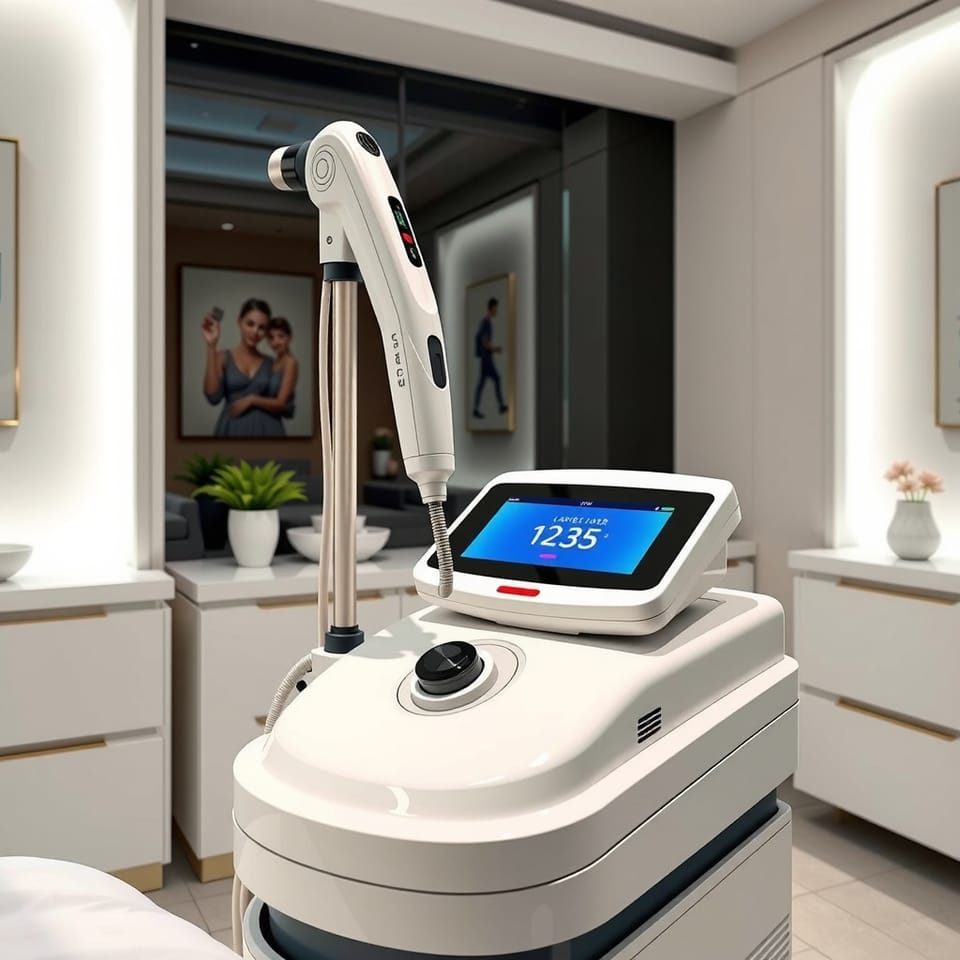
Twenty to thirty minutes of shaving before every single stream. Dealing with ingrown hairs that your HD camera loves to highlight. Cutting into actual streaming time - your income time - just to stay smooth for maybe a day before the stubble's back.
What if you could just... not?
Laser hair removal's become one of those things models can't stop talking about. You'll see it in Discord servers, Reddit threads, even DMs - performers calling it one of the best career decisions they've made. But we're talking $500 to $2,000+ upfront. So the real question isn't whether it works (it does), it's whether it makes sense for you specifically.
Let's get into the actual costs, the time you'll really save, and what models who went through with it wish someone had told them before session one.
The Time-Money Equation: What You're Actually Spending on Shaving
Before we dive into laser pricing, let's look at what you're already dropping on razors:
Streaming 4-5 times a week? Spending 25 minutes shaving each time? That's almost two hours every week. Over a year, you're looking at 86 hours. That's more than two solid weeks of work - gone. Just on hair removal.
And that's before we even talk about what you're buying:
- Razors and replacement blades: $15-30/month
- Shaving cream or gel: $8-15/month
- Stuff for razor burn: $10-20/month
- Ingrown hair treatments: $15-25/month
That's $48-90 every month. Nearly $600 to over $1,000 a year, just on products. And we haven't even counted the opportunity cost - the streams you could be doing instead, the sleep you're sacrificing for morning prep.
Suddenly that $1,200 laser package that lasts for years? Starts looking pretty different.
What Laser Hair Removal Actually Costs (And Why No One Will Tell You Upfront)
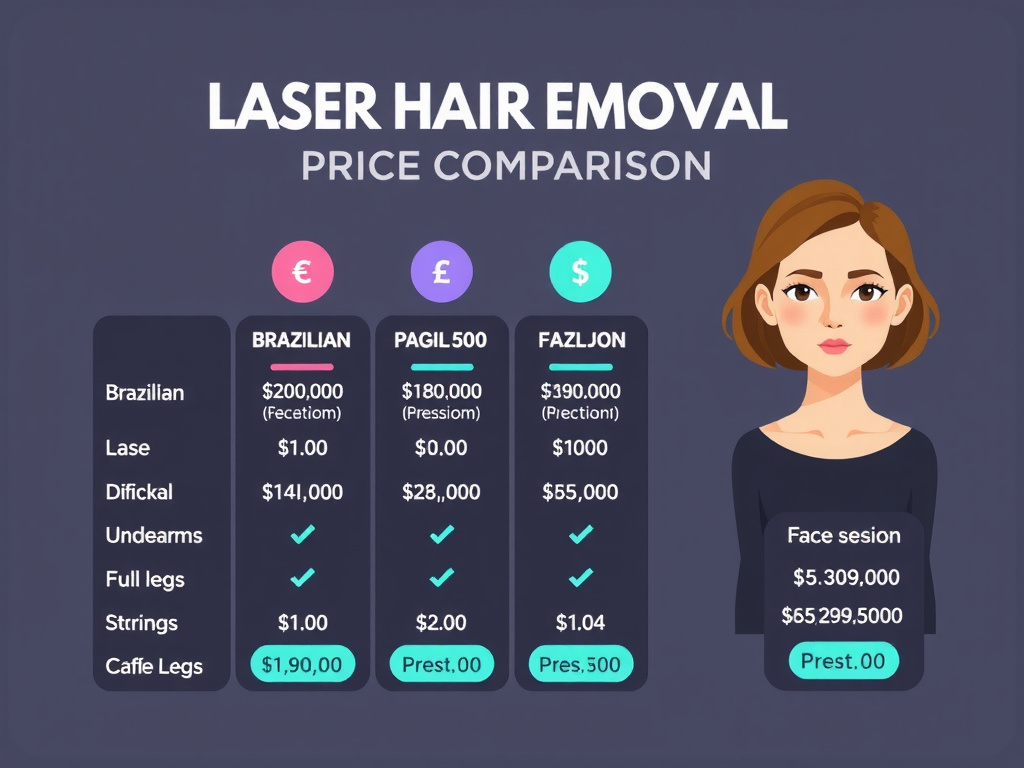
Here's what drives models crazy: most laser clinics won't give you pricing until you come in. Some of it's legit - your skin tone, hair color, and thickness all factor into how many sessions you'll need. But let's be real, it's also a sales thing.
That said, here's what models are actually paying:
Brazilian (bikini area): $150-300 per session
Underarms: $75-150 per session
Full legs: $300-500 per session
Face: $100-200 per session
Most areas need 5-8 sessions, spaced about 4-6 weeks apart. Some of the newer lasers can get you there in 1-2 sessions, but that depends on your hair and the tech they're using.
For cam work, Brazilian and underarms give you the biggest bang for your buck. A typical package for both? You're looking at $800-1,500 for 6 sessions.
The Pain Question: What It Actually Feels Like
Pain's all over the map depending on the machine. This is where asking the right questions at your consultation actually matters.
The newer machines with cold air technology? Most people say it's barely anything. One model put it this way: "I just finished my fifth session yesterday and honestly can't recommend it enough. It's saved so much time and stress."
Older machines though? Yeah, those can hurt, especially in sensitive spots. The tech's gotten way better in the last 5 years, so definitely ask what kind of machine they have and how old it is.
How long each session takes:
- Underarms: 5-10 minutes
- Brazilian: 15-30 minutes
- Full body: 2-3 hours
The Fine Print: When Laser Doesn't Work
Laser isn't one-size-fits-all. It targets the pigment in your hair follicles, which means there are limits:
Got red, blonde, or super light hair? Laser won't work for you. The machine literally can't see it well enough to target it. If that's you, electrolysis is your only permanent option.
Works best on darker hair with lighter skin. Very dark skin can be trickier depending on the laser type, though newer tech has opened things up for more skin tones.
Electrolysis: The More Expensive (But Actually Permanent) Alternative
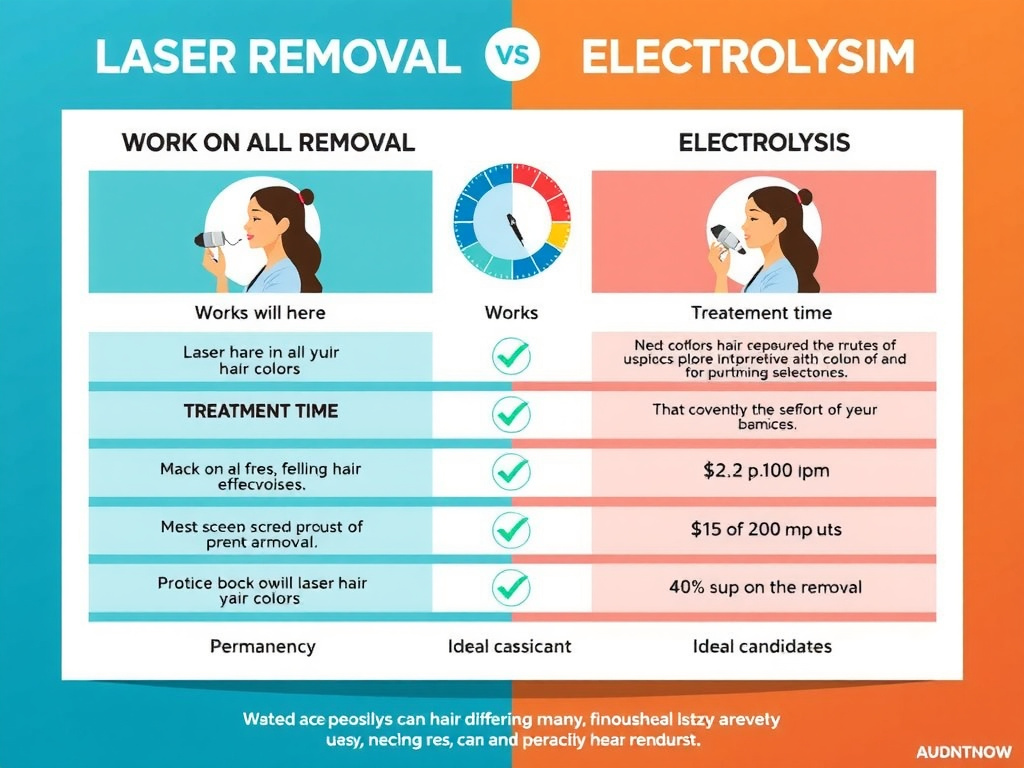
If laser's not going to work - or you want results that are genuinely permanent - electrolysis is worth looking at.
Unlike laser, electrolysis is FDA-approved as actual permanent hair removal. Works on any hair color, any skin tone, because it's not about pigment - it's destroying each follicle individually with a tiny electrical current.
The catch:
- Costs more per session: $70-100/hour
- Takes longer overall (they're treating one hair at a time vs. a whole area)
- But once a follicle's treated? It's done for good
Budget hack: Check if there's an electrolysis school near you. Students working under supervision often charge way less - like $100 for a 3-hour session. Can make electrolysis cheaper than laser for smaller areas.
At-Home Laser Devices: Do They Actually Work?
At-home devices (Braun, Tria, Philips Lumea) run $300-600 and a lot of models are trying them instead of clinics. This fits into treating personal care equipment as a business expense.
What's good:
- One-time cost that pays itself off in months compared to clinic prices
- Total privacy, do it whenever
- Treat areas on your own schedule
What's not:
- Not as powerful as professional machines, so it takes longer to see results
- You actually have to stay on top of it yourself
- Some spots are really hard to reach on your own
Models using at-home devices say they work if you're consistent. But it needs more treatments over a longer timeline than professional laser. If you can stick to a schedule, it's definitely cost-effective.
The Natural Look Strategy: When Less Is More
Here's something a lot of models don't think about: you don't have to zap everything.
Natural pubic hair actually has a solid audience. Keeping some fullness while using laser selectively on the bikini line gives you the best of both - you look groomed without the daily hassle.
Plus it cuts costs. Instead of full Brazilian laser, you're only treating the areas that show up in your usual camera angles or where you get the worst ingrown hairs. This approach connects to making strategic grooming choices that match your performance goals.
How to Find Deals (Without Compromising Quality)
Models are finding legit deals through:
Groupon: Discounted first sessions at local clinics. Low-risk way to test a provider and see results before committing to a whole package. Just check they're using modern equipment before you book.
Package deals: Most clinics discount when you buy 6-8 sessions upfront instead of paying per session. If you're committed, this can save 20-30%.
New client specials: A lot of places run promos for first-timers. Call around and ask about current offers instead of booking at the first clinic you find. This negotiation approach is similar to finding financial advantages in your business choices.
The Tax Advantage: Yes, It's Deductible
Here's something a lot of models miss: laser hair removal is a legit business expense when you're using it for cam work.
Same as your lights, your webcam, your streaming setup - grooming services you need for your on-camera look are tax-deductible. Keep those clinic receipts and invoices. This cuts your taxable income by the full treatment amount.
Spending $1,200 on laser and you're in the 22% tax bracket? That deduction saves you about $264 in taxes. So the real cost's closer to $936.
What to Ask During Your Consultation
When you book that first consultation, these questions separate good clinics from ones just trying to upsell:
- What laser machine do you use and how old is it? (Tech's improved a ton - newer ones with cold air cooling are way more comfortable)
- How many sessions will I probably need for my hair type and skin tone?
- What happens if I'm not seeing results after the recommended sessions?
- Got payment plans or package discounts?
- What should I expect for maintenance later? (Annual touch-ups are pretty normal)
- Can I get evening or weekend appointments? (Matters if you stream during the day)
A solid clinic will give you straight answers. If they dodge pricing questions or push hard for you to commit on the spot? Red flag.
The Realistic Timeline: When You'll Actually See Results
Laser hair removal's not instant. Here's the real timeline:
After session 1: Hair sheds over 1-2 weeks, then grows back. You might not see much reduction yet.
After session 3-4: Most models notice way less hair growth and it takes longer to come back.
After session 6-8: Major reduction. Lots of models can go weeks without any touch-ups.
Ongoing: You'll probably need touch-ups once or twice a year to maintain it, since some dormant follicles can wake up over time.
The whole process from first to last session takes about 6-9 months, since you're spacing them 4-6 weeks apart to catch hair in different growth phases.
So Is It Worth It?
For most established models streaming regularly? Laser hair removal pays for itself in time savings within the first year - and keeps delivering for years after.
It's worth it if:
- You're streaming 3+ times a week and hair removal's eating your schedule
- Ingrown hairs or razor burn mess with your on-camera confidence
- You've got dark hair and light-to-medium skin (best candidates for laser)
- The upfront budget works or you can finance it
Maybe skip it if:
- You stream sporadically or just a few times a month
- You've got red, blonde, or really light hair (laser won't work well)
- The upfront cost would stress your budget or block other business investments you need
- You're not sure camming's a long-term thing for you
The models calling it one of their best investments? Usually they were already spending tons of time and mental energy on hair removal. If that sounds like you, the numbers work out fast.
The ones who regret it? Usually weren't good candidates (wrong hair/skin combo) or didn't realize how much time commitment multiple sessions actually take.
The Bottom Line
Laser hair removal's not magic, and it's definitely not for everyone. But for models who fit the criteria - regular streamers with dark hair and the right skin tones - it's a business investment that keeps paying you back in time, confidence, and way less daily stress.
The trick is realistic expectations: plan on 6-8 sessions over 6-9 months, budget for yearly touch-ups, and pick a reputable clinic with modern equipment.
And if laser's not going to work for you? Electrolysis gives you truly permanent results that work on all hair colors and skin tones - just takes longer and costs more per session.
Either way, models who've made the switch keep saying the same thing: wish they'd done it sooner.